
Get your tickets here:
Program
Day 1:
Day 2:
Day 3:
Friday, October 23
Saturday, October 24
Sunday, October 25
9:00
Registration
Morning
Keynotes
Afternoon
Keynotes
Morning
Workshops I
Afternoon
Workshops II
Morning
Network meeting
Day 1 will set out exciting key notes on bold and engaging topics based on the strands of this year’s theme.
Day 2 will see a day of WWNA staples, action and inspiration-focused Workshops and snappy, energetic Perspectives presentations.
Day 3 will consist of the customary, relaxed appraisal of the AAN






Day 1: Keynote Speakers
Antonia Navarro-Tejero
is a Full Professor at the University of Córdoba (Spain), where she chairs the Permanent Seminar on India Studies. She currently serves as Vice-President in the MSCA-IF (SOC) section of the European Commission. Among other awards and recognitions, she was a Fulbright scholar at the University of California, Berkeley, and a Salvador de Madariaga Fellow at Syracuse University, New York. She has been a visiting professor at Sapienza University (Rome), Université Sidi Mohamed Ben Andellah (Fés, Morocco), Galway University (Scotland, UK), London Metropolitan University (UK), Aveiro University (Portugal), Leiden University (The Netherlands), University of Peradeniya (Sri Lanka), Dublin City University (Ireland), Jagiellonian University (Poland), University of Lisbon and University of Aveiro (Portugal), Jawaharlal Nehru University (India), and University of Dhaka (Bangladesh), among many other universities. Her research interests include Transnational Feminist Studies and Medical Humanities from an intersectional perspective. She is the India Studies Series Editor for Cambridge Scholars Publishing and has authored more than 100 publications. She has been a keynote speaker at Conferences around the world and has been invited by institutions such as the Indian Council for Cultural Relations, Casa Asia, the United States Council for International Exchange of Scholars, Instituto Cervantes, public universities, NGOs, and Embassies. She has also participated in numerous international conferences and other academic meetings as a lecturer and panelist in roundtables. Prof. Navarro-Tejero has coordinated and participated in research projects as well as teaching innovation projects. She founded the Spanish Association for Interdisciplinary India Studies.

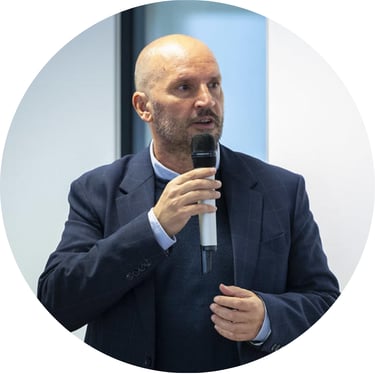
Antonio Molina Fernández
is an Assistant Professor in the Department of Social, Work, and Differential Psychology and a member of the Social and Cultural Determinants of Health research group at the Complutense University of Madrid. With 25 years of professional experience in clinical and social intervention, Dr. Molina Fernández specializes in addictions, mental health, and social psychology. His academic work is defined by an interdisciplinary approach, bridging psychology with Social and Cultural Anthropology, notably through his ongoing collaboration with the Master of Applied Anthropology at the University of Salamanca. Throughout his career, he has directed significant international research projects in collaboration with entities such as the UNODC and the European Union. His extensive publication record focuses on addiction recovery, gender perspectives, and psychosocial interventions. Dr. Molina Fernández remains committed to addressing complex societal challenges through evidence-based, culturally informed practices that integrate global public health perspectives.
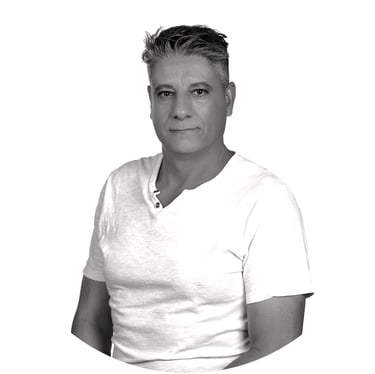
José Antonio Martín Herrero
is Professor of Psychology and Applied Anthropology at the University of Salamanca. He directs the M.A. in Applied Anthropology at the same institution. His most important research revolves around medical anthropology (addictions), psychological anthropology, ethnography, and applied anthropology (tourism and development). Dr. Martin Herrero has numerous publications (8 books and more than 30 articles on the psychological field in its various facets), including the most recent Anthropological and Psychological Bases of Addictions (Bases Antropológicas y Psicológicas de las Adicciones, 2021) and Couples Therapy (Terapia de Pareja, 2024).

Mirko Pasquini
Ph.D, is an Assistant Professor in Medical Anthropology at the School of Global Studies at the University of Gothenburg and an affiliated researcher at the Centre for Medical Humanities at Uppsala University. His research interests combine medical anthropology, global and public Health governance, with a focus on triage, emergency medicine, medical ethics, and decision-making. These are explored through hospital ethnography and primary care in Italy and Sweden. Mirko's research ranges from the social dynamics of attention in triage to trust, mistrust, and violence in care interactions. Mirko worked across different healthcare systems in Europe. He is currently engaged in international projects on mistrust and violence against healthcare staff, collaborating with regional healthcare authorities in Sweden and Italy to bring research insights into community-centered primary care. Mirko is also teaching the application of social sciences in medicine to foster health equity and social justice in Sweden, Italy, and Denmark.
TITLE OF PRESENTATION:
A Methodology of Hope: Tracing How Future Imaginaries Were Put into Practice
TITLE OF PRESENTATION:
Wars, Substances and Addictions: Perspectives and Solutions from Social Anthropology to a Global Problem
TITLE OF PRESENTATION:
The Negotiation of Urgency: Economies of Attention in an Italian Emergency Room
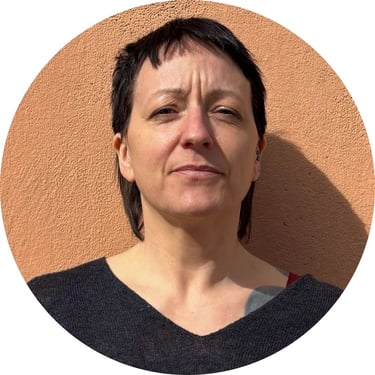
Emma Eleonorsasdotter
is a Swedish fil. Dr. of Ethnology, holding a position as a lecturer and researcher in Cultural Analysis at Åbo Akademi in Finland. She is also a journalist and social activist, specifically focusing on human values and intersectional anti-racism. Her current research is focused on two connected projects, both concerned with the connection between space and political hope: “Taking Place – On occupying places to create space for hope” and “Then and There: Hope, imaginaries and liveable lives across queer Nordic contexts 1948-2020.”
The driving force behind both projects is to develop knowledge about hope as a future-oriented practice, through methodologies that examine how hope has mobilised people and enabled things to happen over time. Underpinning this work is a broader ambition to develop an account of how hope for a better world has been and is made tangible through practice.
TITLE OF PRESENTATION:
From Dai to Nurse: Colonial Epistemic Violence and the Decolonization of Childbirth in India


Location
The complex of the Colegio del Arzobispo Fonseca has a fascinating history of its own: built in the 16th century as a university college for Galician students (as its spectacular Plateresque courtyard and attached chapel can attest), it was later used as a military hospital and barracks during the Peninsular War, before returning to academic life. The Salamanca Hall, once a grand reception room, features stunning Renaissance architecture and artwork. A Roman or pre-Roman origin of this specific area has been suggested, as the complex stands near the ancient defensive line of the city, just a short walk from the Tormes River and the Roman Bridge, seamlessly connecting Salamanca's ancient roots with its vibrant university present.
Campus Ciudad Jardín. Avda. de la Merced 109-131, 37005-Salamanca
University of Samarcanda


Salamanca guide


Team
Dan Podjed (Founder & Executive Advisor)
Anja Pogladič (Network Convenor)
Carla Guerrón Montero (Network Convenor
Michaela Ahonen (Designer)
Rachele Fundone (Social Media Manager)
Paula Seidensticker (Social Media Manager)
Lily Hearn (Perspectives Coordinator)
Katarina Polajnar Horvat (Workshops Coordinator)
Asia Bonciolini (Website Manager)
Raquel Garcia Plaza
José Antonio Martìn Herrero
Francisco Giner Abati
Aitana Camarzana Fuertes



Organizers
Partners


